

AI for Accountants Vol. 2 - Prompting 101
Welcome to issue #003 of New Age Accounting — Vol. #2 of AI for Accountants. Prompting 101.

LLMs are powerful. However, they’re only as good as the question you ask them. Prompting. At times, it’s more art than science. I’ve seen dozens of accountants try AI once, receive a generic response, and conclude it doesn’t really work for them. Two callouts here:
1/ More often than not, the issue isn’t the tool — it’s the prompt.
2/ If the only AI you’ve used is the chat feature, you haven’t even scratched the surface. But we’ll save that for another day!
The art of prompting
What is prompting? Simple answer: the questions, comments, and/or instructions you provide to an LLM. It can be one word or a paragraph, a question or a command, simple or detailed. Whatever you put into the little box (see image below) is considered a prompt.
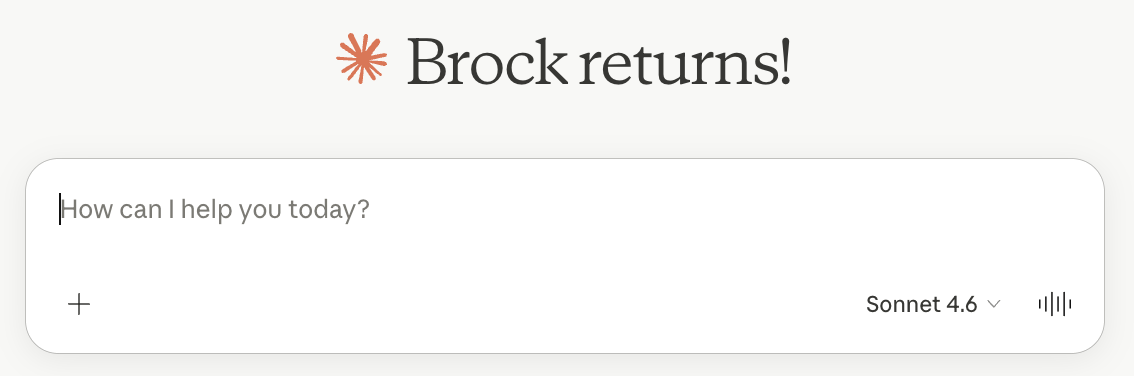
General tip: the more specific the prompt, the more effective the output. For example, if you type “help me with this reconciliation” — but fail to add additional context — the LLM has no idea what reconciliation you’re referencing, what account, what steps you’ve already taken, the format of the output, etc. It will provide something very generic because that is all it has to work with.
The fix is simple: be more specific. So what does ‘more specific’ actually look like? That’s where CO-STAR comes in. There are several prompting frameworks out there. CO-STAR is the one I keep coming back to, and the one I believe translates best to accounting workflows.
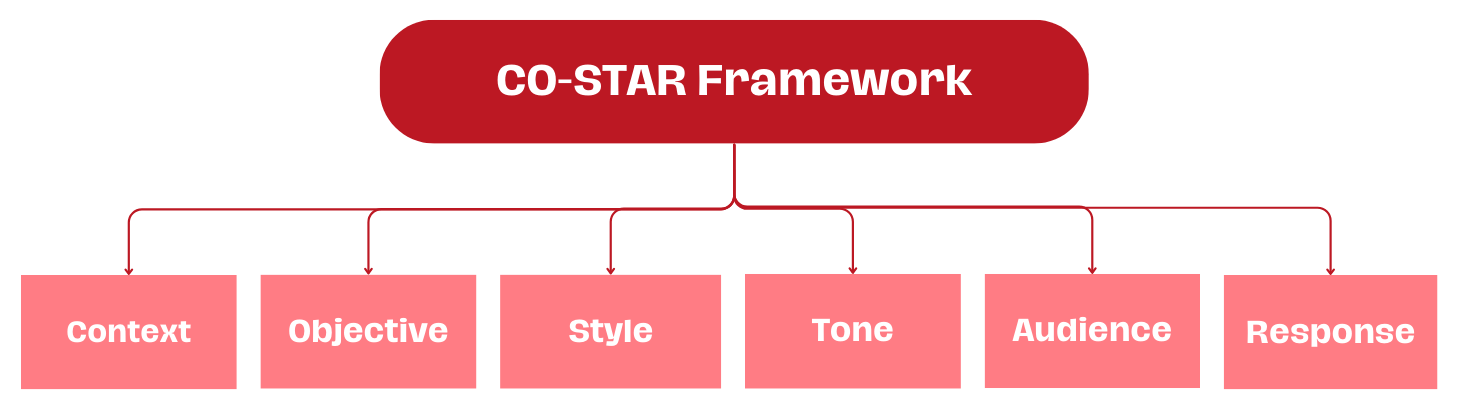
Reference to image.
Context: The background information related to the situation, project or topic. Example: “We are a mid-sized manufacturing company closing out the Q4 books.”
Objective: The specific goal or task you want to be accomplished. Example: “Reconcile accounts payable and flag any discrepancies over $500.”
Style: The writing style you want. Example: “Present this in a formal, financial reporting style.”
Tone: The emotional feel of the output. Example: “Keep the tone professional, conservative, and audit-ready.”
Audience: Who the output is for. Example: “This report is intended for the CFO and the external auditors.”
Response: The format and length you expect. Example: “Provide the journal entry as a CSV file.”
Here’s what that looks like in practice. An example of a weak prompt would be:
“Help me write a variance explanation for our marketing spend.”
An example of a strong prompt would be:
“I’m writing the variance commentary for our October board report. Marketing came in $47k over budget. The biggest drivers were a campaign we pulled forward from Q1 and a conference sponsorship that wasn’t in the original plan. Write a two paragraph explanation in clear, non-technical language for a CFO audience.”
Same desired output, completely different results. The first may produce a template or a rough outline. The second gets you something you could actually send to the intended audience. The more specific, the better.
Start with one prompt this week. Use CO-STAR. See what comes back. Next issue, we’ll dive deeper into the trenches. But prompting is the foundation — get it right first.
Here’s my question to you:
What’s a task you do every week that you haven’t tried prompting yet? Why not? Click the button below and tell me. I read every response.
The purpose of New Age Accounting is simple: to empower accountants — at every level — to become builders, not bookkeepers. Whether you’re a staff accountant, a controller, or a CFO, there’s something here for you. Some topics will be high level, others will come with step-by-step guides, and some will include the exact prompts and tools you need to start building today.
If you’ve made it this far, you’re already thinking differently about this profession. Subscribe and come build with us.